
Knives
Types of Japanese Knife Steel Explained: Carbon, Stainless and Powder Steels
As an Amazon Associate we earn from qualifying purchases. We may earn a commission from links on this page, at no extra cost to you. Learn more.
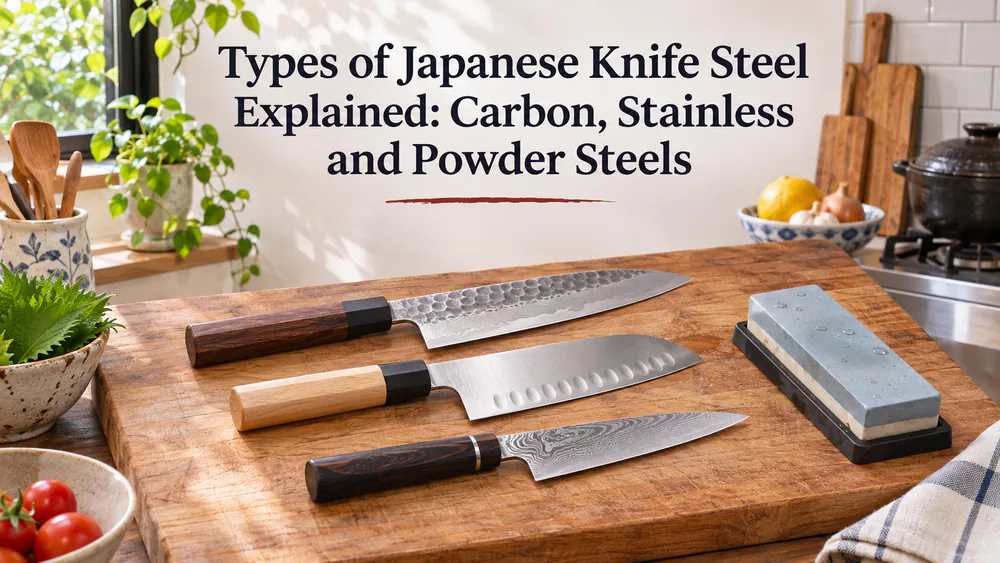
Japanese knife steel falls into three families. Carbon steels such as Shirogami and Aogami take the keenest edge and sharpen fast, but they rust if you ignore them. Stainless steels such as VG-10 and Ginsan trade a little edge life for easy care. Powdered steels such as SG2 and ZDP-189 hold an edge longest, and they cost you more effort on the stones. We judge every steel by the same questions: how the edge holds, how it sharpens, and how much upkeep it asks for.
Here is how each steel behaves at the board and on the stone, so you can pick the one that fits your habits. If you are still choosing a knife shape first, start with our Japanese knife reviews and guides.
Japanese Knife Steel at a Glance
The table below puts every major grade side by side. Hardness figures are finished-knife ranges, because makers heat treat the same grade differently.
Japanese Knife Steel Chart (Hardness, Edge Retention, Rust Risk)
| Steel | Family | HRC range | Edge retention | Toughness | Rust risk | Sharpening ease |
|---|---|---|---|---|---|---|
| Shirogami #1 | Carbon | 62-65 | High | Low | High | Easy |
| Shirogami #2 | Carbon | 60-64 | Good | Medium | High | Very easy |
| Shirogami #3 | Carbon | About 60 | Moderate | Higher | High | Easy |
| Aogami #1 | Carbon | 61-65 | High | Medium-low | High | Easy to moderate |
| Aogami #2 | Carbon | 61-64 | High | Medium | High | Easy |
| Aogami Super | Carbon | 63-68 | Highest of the carbon steels | Medium-low | High | Moderate |
| Ginsan | Stainless | 60-62 | Good | Medium | Low | Easy |
| VG-10 | Stainless | 60-61 | Good | Medium | Low | Easy |
| AUS-8/10 | Stainless | 58-60 | Moderate | High | Low | Very easy |
| SG2/R2 | Powder stainless | 62-64 | High | Medium-low | Low | Moderate |
| ZDP-189 | Powder stainless | 64-67 | Very high | Low | Low to moderate | Hard |
Our edge-retention and toughness grades summarize how these steels behave in use; they are not mill data. Treat them as a ranking, not a measurement.
What Makes Japanese Knife Steel Different
Japanese kitchen knives run harder than most Western ones. Japanese blades sit at roughly 58 to 68 HRC, while German knives sit around 56 to 58. That extra hardness is why a Japanese edge can be so fine and why it can chip when you misuse it. The sweet spot for most cooks is 60 to 64.
Japanese vs Western steel comes down to that trade. Western knives are softer and forgiving, and they dull sooner. Japanese knives stay sharper longer and ask for gentler handling.
Hardness (HRC) and Why It Matters
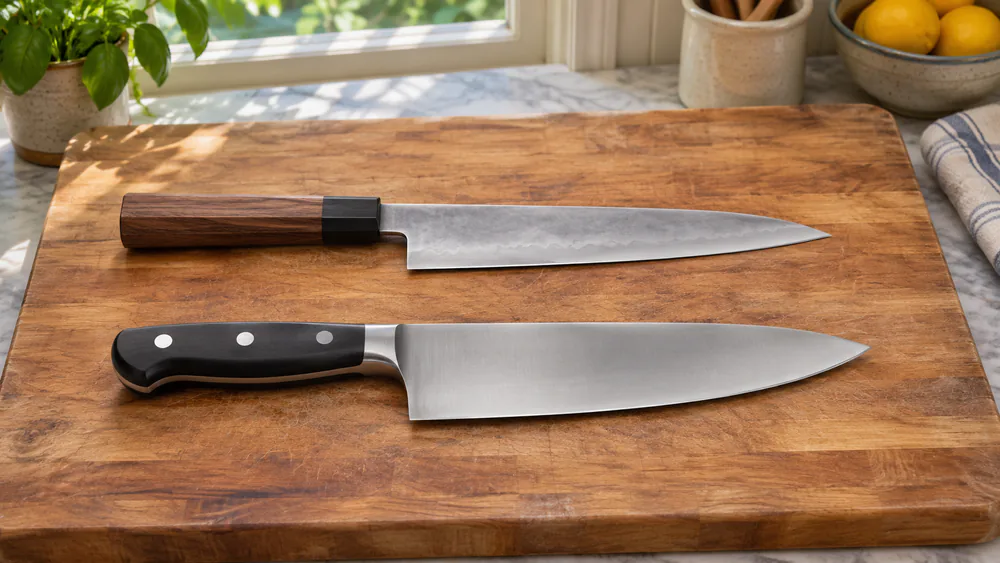
HRC stands for Rockwell C, the scale used to measure how hard a steel is after heat treatment. A higher number means the steel resists wear and holds an edge longer. It also means the steel is more brittle and harder to sharpen.
The grade name does not fix the number. The same Shirogami #3 can reach 60+ HRC when water-quenched and only 52+ when oil-quenched, so the maker's heat treatment matters as much as the steel. That is why we give ranges in this guide, not single figures.
Edge Retention, Toughness and Corrosion Resistance
Three properties pull against each other, and every steel is a compromise among them.
- Edge retention: how long the edge stays keen under real prep. Hard steels with lots of carbide win here.
- Toughness: how well the edge resists chipping. Softer, simpler steels win here.
- Corrosion resistance: how well the blade shrugs off moisture. A steel counts as stainless at about 10.5% chromium or more.
You cannot max out all three. Pick the one you care about least and give it up.
Core Steel vs Cladding (Damascus and Kuro-uchi)
Most Japanese knives are two-ply or three-ply. A hard core steel forms the cutting edge, and softer stainless or iron cladding wraps the sides. The steel named on the listing is the core. The cladding protects it, adds toughness and makes sharpening easier.
Damascus is a cladding pattern, not a steel grade. A Damascus VG-10 knife cuts exactly like a plain VG-10 knife. Kuro-uchi is a rough, dark forged finish left on the cladding. The finish changes the appearance and offers light protection without changing the core steel.
Carbon Steels: The Traditional Japanese Choice
Carbon steels hold the longest tradition in Japanese cutlery. They contain little or no chromium, so they take a very fine edge and sharpen quickly. They also rust and patina.
We handle carbon blades the way a butcher handles a working knife. We wipe them dry right after cutting onions, citrus or tomatoes, and we store them with a thin film of camellia oil. That small habit keeps the steel clean.
Warning. Carbon steel rusts if you leave it wet or dirty. Never leave a white or blue steel knife in the sink or a damp rack, even for an hour.
Shirogami (White Steel) #1, #2, #3
Shirogami is made by Proterial (formerly Hitachi Metals, renamed in January 2023) at its Yasugi works. The name means "white paper": the grades are labeled white paper, blue paper and yellow paper. It is the purest Japanese carbon steel, with a very fine grain.
- Shirogami #1 carries 1.25-1.35% carbon. It gets the finest edge of the three, but it is brittle. Dense ingredients can chip it, and it rusts quickly without upkeep.
- Shirogami #2 carries 1.05-1.15% carbon. It is the balanced, most popular grade. It sharpens easily and returns to a keen edge fast on a stone.
- Shirogami #3 carries 0.80-0.90% carbon. It is the softest and toughest of the group, with the shortest edge life.
The mill sets a minimum of 60+ HRC for #1 and #2, and finished knives land in the ranges in our chart. White steel is the favorite for sashimi knives such as the yanagiba.
Shirogami #2 is the steel we point people to for learning. It teaches you how steel feels on a stone and how a burr forms. It makes a good second knife once wipe-dry habits are set.
Aogami (Blue Steel) #1, #2 and Super
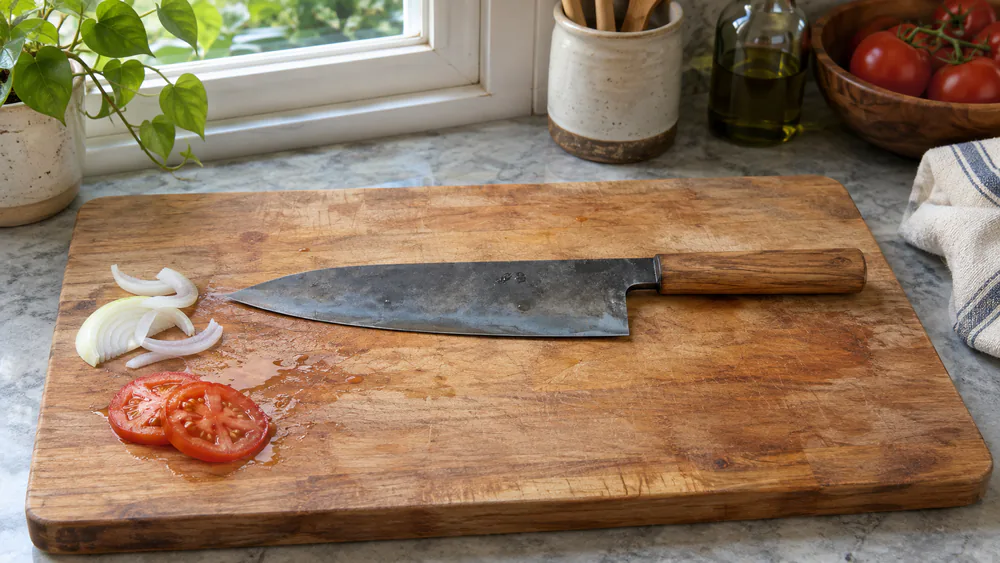
Aogami starts with the Shirogami base and adds chromium and tungsten. Super adds vanadium and molybdenum as well. The extra alloy gives longer edge life than white steel, and it still sharpens well. It is still a reactive carbon steel.
- Aogami #1 carries 1.25-1.35% carbon with chromium and tungsten.
- Aogami #2 carries 1.05-1.15% carbon. It is the benchmark all-rounder, and the one we would pick for a first blue steel knife.
- Aogami Super carries 1.40-1.50% carbon with vanadium added. It has the longest edge life of the carbon group.
An Aogami Super gyuto holds its edge through prep sessions that would dull lesser steel noticeably. It also takes real skill on the stones. If you do not yet sharpen, start with Aogami #2.
Other Carbon Steels (SK, Kigami, HAP40, Tamahagane)
A few more names show up on listings, and each means something different.
- SK is a plain high-carbon steel. It sits at the entry-level end of the carbon range.
- Kigami (yellow paper) carries the same carbon as Shirogami #2 but looser impurity limits. It sits between SK and the white and blue grades.
- HAP40 is a powder high-speed steel, not a traditional carbon steel. It has 3.70-4.70% chromium, so it is only semi-stainless. It resists chipping better than ZDP-189 at similar edge retention, and the exposed edge can darken and patina.
- Tamahagane is the traditional tamahagane steel from Japanese tatara smelting. Iron sand and charcoal are smelted in a clay furnace for 36-72 hours. It is still made for swords. Shirogami and Aogami are made to a chemical spec and are not the same material.
Stainless Steels: Easy Care, Everyday Performance
Stainless Japanese steels carry enough chromium to resist rust in a normal kitchen. They are the workhorse choice for home cooks. They give up a little sharpness and a little feel compared with carbon, and in return they forgive a forgotten knife on the counter.
VG-10
VG-10 is the most popular Japanese stainless. It is made by Takefu Special Steel in Echizen, Fukui, and it is conventionally melted, not powder. The composition is about 1.00% carbon and 15% chromium, with molybdenum, vanadium and cobalt. Finished knives run about 60-61 HRC. For a deeper look, read what VG10 steel is and how it behaves.
VG-10 stays sharp through typical home prep for several weeks. It responds well to water stones, a little slower than carbon. It can micro-chip at the edge if you sharpen it at too acute an angle.
It survives brief moisture and a night in the dish rack without rusting. Standing water eventually leaves surface spots, so it is stainless, not rustproof. Be careful with fakes too: Takefu warns that counterfeit VG10 knives are sold online.
Ginsan (Silver #3) and Other Mid-Range Steels
Ginsan, also called Silver #3, is Proterial's stainless answer to Shirogami. It carries 0.95-1.10% carbon and 13.00-14.50% chromium. The mill rates it 59+ HRC, and knives run about 60-62.
Ginsan sharpens easily and takes a clean, keen edge, closer to carbon in feel than most stainless. It is a good choice if you want carbon-like sharpening without carbon-like upkeep.
AUS-8 and AUS-10
AUS-8 and AUS-10 come from Aichi Steel. They are in the 13% chromium class. AUS-8 finishes at about 58-59 HRC, and AUS-10 around 60, depending on the maker.
These are the tougher, more chip-resistant stainless options. They sharpen easily and give up some edge life. For an entry-level Japanese knife that will not punish mistakes, they are hard to beat.
Powdered (PM) Steels: Premium Performance
Powder metallurgy makes steel from fine atomized powder that is pressed and sintered. The result is a very even structure with small, evenly spread carbides.
Powder steels are the high-end of Japanese cutlery. They hold an edge longest, and they take longer to sharpen. We recommend diamond or ceramic stones for them.
SG2 / R2
SG2 stands for Super Gold 2 (written SPG2). Takefu Special Steel makes it by powder metallurgy and does not disclose the composition. Mill hardness is 62+, and finished knives run about 62-64 HRC.
SG2 is harder than VG-10 with modestly longer edge life, and its rust resistance is about equal. R2 is sold as the same steel, but that equivalence is a trade convention, not a mill statement.
SG2 takes a great edge. A dull blade needs 20 to 30 minutes on the stones to restore, and diamond or ceramic stones make the job easier. Poorly heat-treated SG2 can chip on dense food.
ZDP-189
ZDP-189 is among the hardest kitchen steels. Proterial lists 3.00% carbon and 20% chromium, with other elements undisclosed. Finished knives run about 64-67 HRC.
It is stainless on paper, but some blades rust anyway. In a water-spray test run by Knife Steel Nerds, ZDP-189 rusted while SG2 and VG-10 stayed clean, so still wipe it dry. It is slow to raise a burr, and it chips if you use it with force on bone or frozen food. It does best on slicers such as the sujihiki.
Carbon vs Stainless vs Powder: Which Is Better?
No family wins outright. Carbon gives you the easiest sharpening and the finest feel. Stainless gives you the easiest care. Powder steels offer the longest edge life, with more sharpening time and a greater risk of chipping.
In our kitchen the question is never "which is best." It is "which one matches this cook." A home cook who sharpens twice a year should pick stainless. Someone who enjoys the stones should try carbon. Someone who slices fish or boneless meat all day can justify powder.
VG-10 vs SG2
Both come from Takefu and both resist rust about equally. SG2 is harder, holds an edge a little longer and is harder to sharpen. VG-10 is easier on the stones and more forgiving.
If you sharpen at home, VG-10 is the safer pick. If you pay a sharpener or enjoy diamond plates, SG2 gives you more edge life per session.
Shirogami vs Aogami
White steel is purer, takes a finer edge and sharpens faster. Blue steel adds alloy for longer edge life and a little more wear resistance. Shirogami #2 and Aogami #2 are the two grades most cooks should compare.
Choose white if you value sharpening feel and slicing. Choose blue if you want the edge to last through a long prep day.
Which Japanese Knife Steel Should You Choose?
Match the steel to your skill, your habits and how hard you work the blade. For a wider view of the options, see our guide to the best knife steel and the types of Japanese knives these steels go into.
For Beginners and Home Cooks
Start with VG-10 or AUS-10. They are stainless, forgiving and easy to sharpen on a basic stone. Ginsan is a fine step up. Skip Shirogami #1 and ZDP-189 until your technique is solid.
If you want to try carbon, Shirogami #2 is the gentlest entry. Commit to the wipe-dry habit first.
For Sushi and Precision Slicing
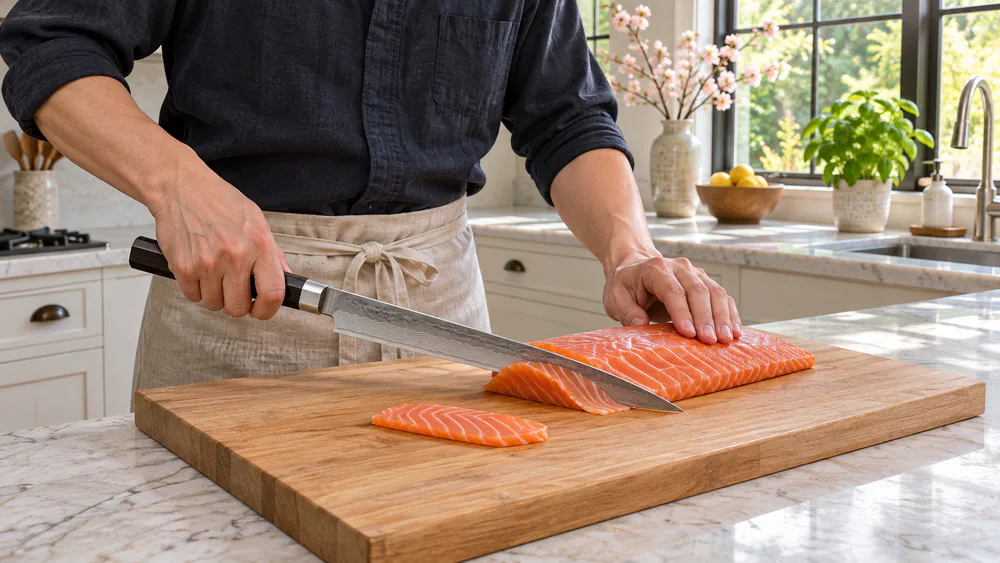
Shirogami #1 and #2 are the traditional choices for sashimi. They take the finest edge and release clean slices. ZDP-189 suits long slicers when you can sharpen with diamond plates and avoid bone.
For Professional Kitchens
A pro line needs knives that survive a busy shift. Aogami #2 and Aogami Super hold their edge through a long prep session. VG-10 and SG2 cover cooks who cannot wipe a knife between every task. AUS-10 works for the rough jobs.
Tip. Not sure where to start? Buy a VG-10 or AUS-10 gyuto first, then add a Shirogami #2 knife once you have the sharpening habit.
How to Care for Each Steel Type
Care changes by family, but a few rules apply to every Japanese knife.
- Carbon steel: wipe it dry right after cutting onions, citrus or tomatoes, and store it with a thin film of camellia oil. A patina is protective. Cut onions or tomatoes, let the residue sit 5 to 10 minutes, and repeat, or use tea or mustard, to build a grey-blue layer. After daily use it settles into a stable dark film.
- Stainless steel: rinse and dry after use. VG-10 survives brief moisture, but standing water leaves spots.
- Powder steel: wipe dry, even the "stainless" grades. Avoid bone, frozen food and twisting cuts.
Honing needs care too. A ceramic or ridged honing rod made for German knives can chip a hard Japanese edge. Use a leather strop or a fine ceramic rod instead. Loose drawer storage chips edges, so use a sheath, a magnetic strip or a block.
Tip. Pick a whetstone grit you will actually use. A 1000 grit stone handles most touch-ups on VG-10, Ginsan and Shirogami #2.
Common Mistakes When Choosing Knife Steel
- Chasing the highest HRC. A higher number holds an edge longer but chips more easily and sharpens slowly. For most cooks 60 to 62 is the sweet spot.
- Trusting the word "stainless." VG-10 and even ZDP-189 can show rust or spots if you leave them wet.
- Buying a steel before you can sharpen it. Aogami Super and ZDP-189 reward skill and punish beginners.
- Ignoring the maker. The same grade varies with heat treatment, so a good maker beats a famous steel name.
- Using the wrong honing tool. German-style rods can chip a hard edge.
- Skipping fakes. Counterfeit VG10 knives are sold online, so buy from a maker or dealer you trust.
Frequently Asked Questions
What steel do Japanese knives use?
Japanese knives use carbon steels such as Shirogami and Aogami, stainless steels such as VG-10, Ginsan and AUS-10, and powder steels such as SG2 and ZDP-189. The steel named on the knife is the core, usually wrapped in softer cladding.
Is Japanese knife steel stainless?
Some is and some is not. VG-10, Ginsan, AUS-8, AUS-10, SG2 and ZDP-189 are stainless. Shirogami and Aogami are carbon steels that rust and patina, and they need to be wiped dry.
Is white steel or blue steel better?
Neither is better outright. White steel is purer, takes a finer edge and sharpens faster. Blue steel holds its edge longer. Choose white for sharpening feel and blue for edge life.
Is VG-10 or SG2 better?
SG2 is harder and holds an edge a bit longer, but it is harder to sharpen. VG-10 is easier on the stones. For home cooks who sharpen themselves, VG-10 is the easier choice.
What is the hardest Japanese knife steel?
ZDP-189 is among the hardest, with finished knives around 64-67 HRC. Aogami Super and HAP40 can also reach the mid-60s. The hardest steels are brittle and slow to sharpen.
What is tamahagane?
Tamahagane is traditional Japanese steel smelted from iron sand and charcoal in a clay tatara furnace. It is still made for swords. Modern kitchen steels such as Shirogami and Aogami are made to a chemical spec and are not the same material.
Conclusion
Pick the steel that matches your habits, not the highest number on the chart. Stainless VG-10 or AUS-10 suits most home cooks, Shirogami #2 and Aogami #2 reward cooks who like the stones, and SG2 or ZDP-189 suit slicing work where edge life matters most. Whatever you choose, spend ten minutes learning to sharpen and keep the blade dry. That habit matters more than the steel name.
Read next
Ready to upgrade your kitchen?
Match the steel to your habits, then browse our buying guides to find the right knife.