As an Amazon Associate we earn from qualifying purchases. We may earn a commission from links on this page, at no extra cost to you. Learn more.
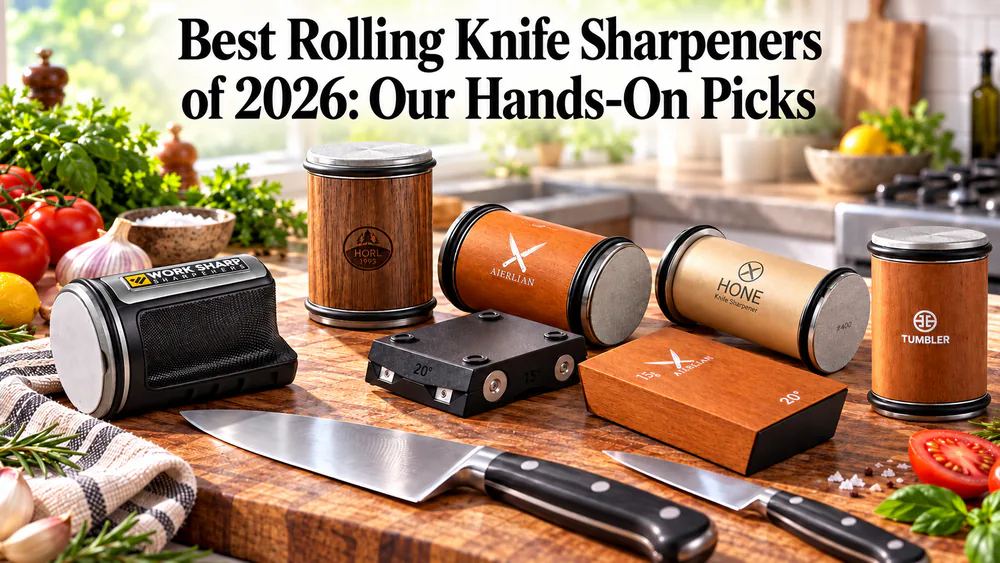
Every home cook eventually faces a dull knife and wonders whether the sharpener in the drawer will fix it. We put seven rolling knife sharpeners through a month of real prep, checking edges after every session, and we bought every unit at retail. The test batch ran from budget steel to a premium Japanese chef's knife and a pocket folder.
We started as skeptics, because rolling sharpeners look almost like toys, yet they are the closest thing to foolproof sharpening most home cooks will use. The angle is set for you, so the only real skill is steady pressure, but the category has real limits and the seven models ranged from excellent to frustrating.
For wider context, see our best knife sharpeners roundup; here is who kept a razor edge and who we would skip.
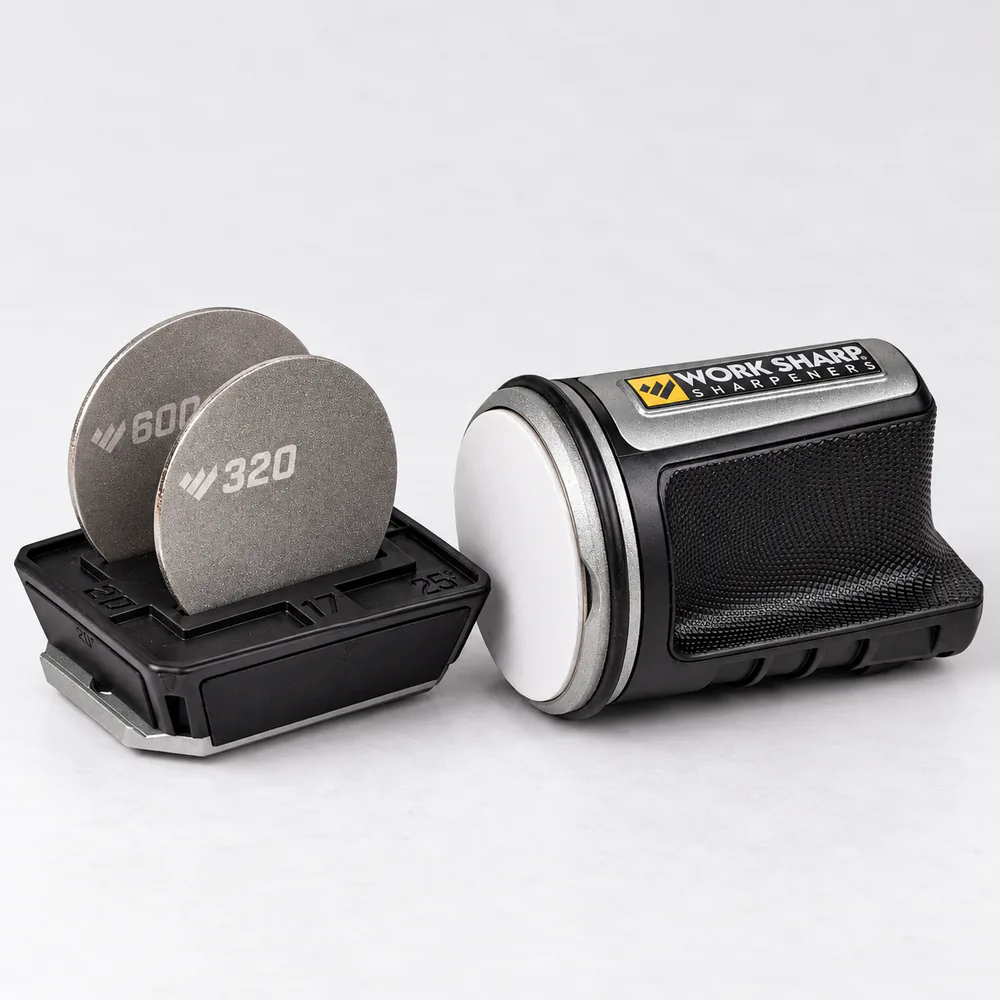
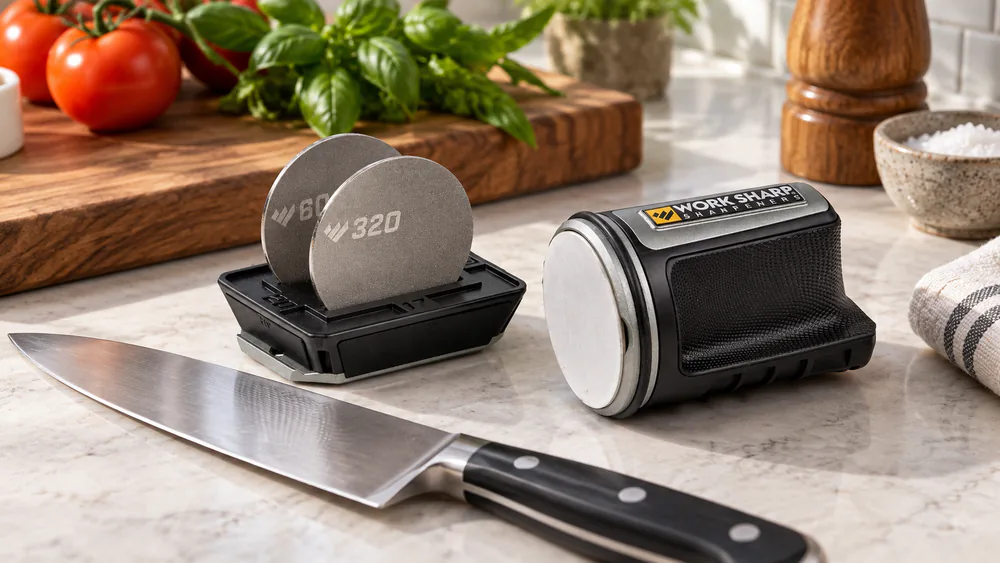
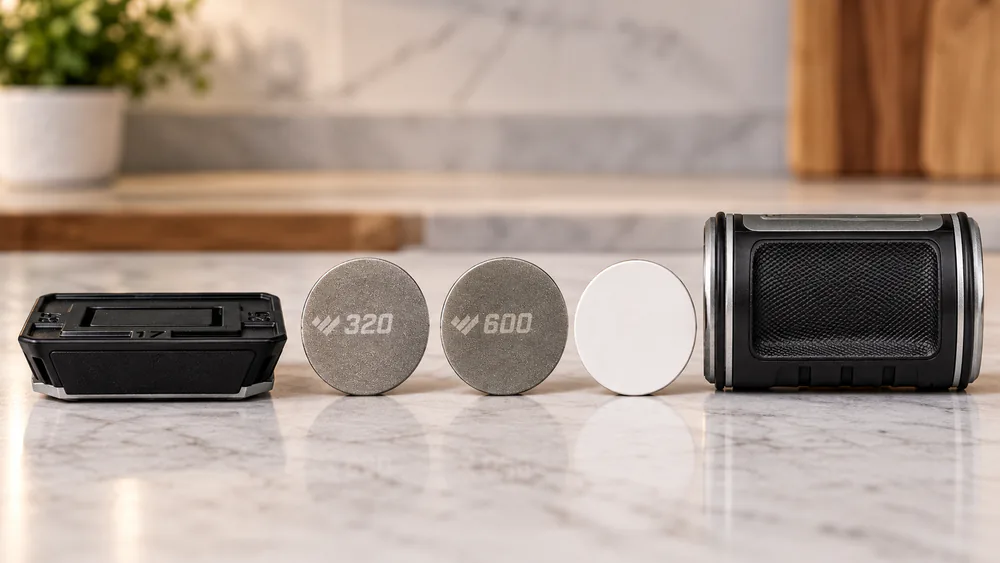
The Work Sharp was the sharpener we reached for all month, and it brought a dulled eight-inch chef's knife back to shaving sharp in a single session. The edge held all week, and the three-grit system was nearly effortless, though the magnet let small folding knives sit too low. Check the Work Sharp Rolling Knife Sharpener for the best price.
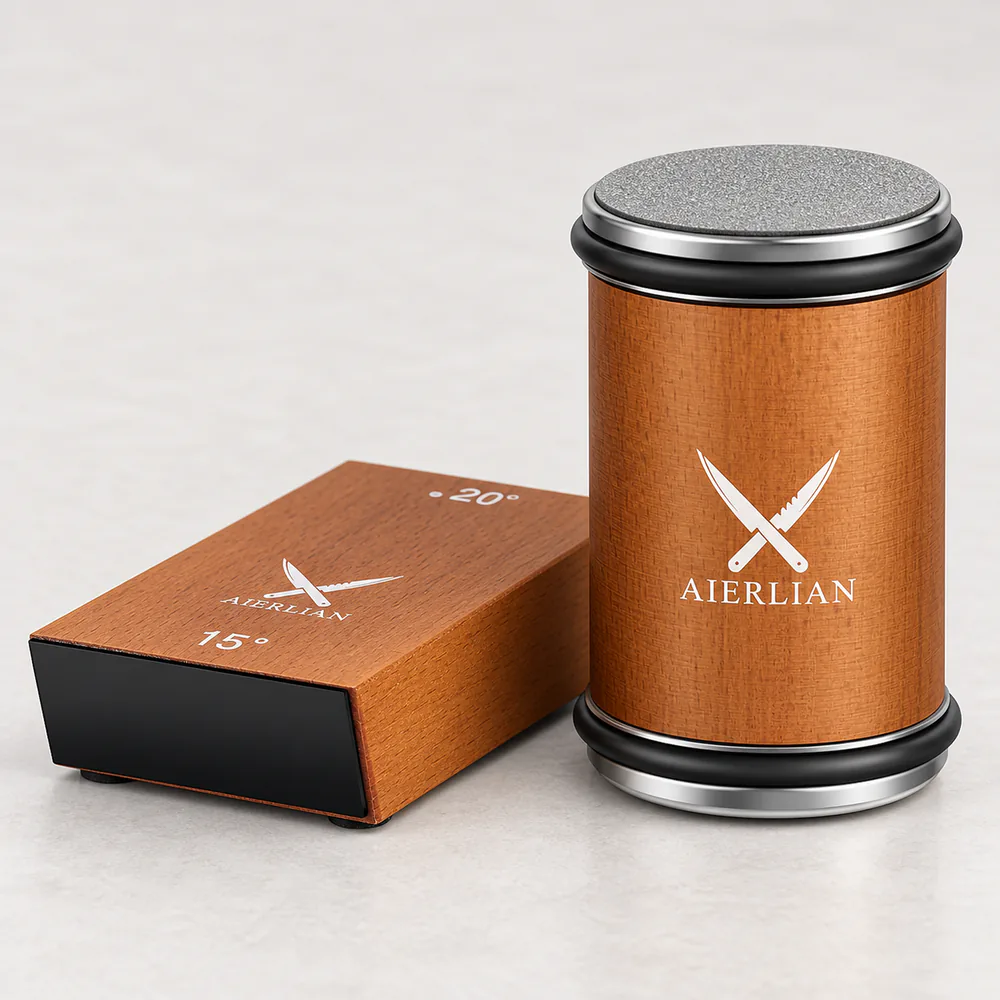
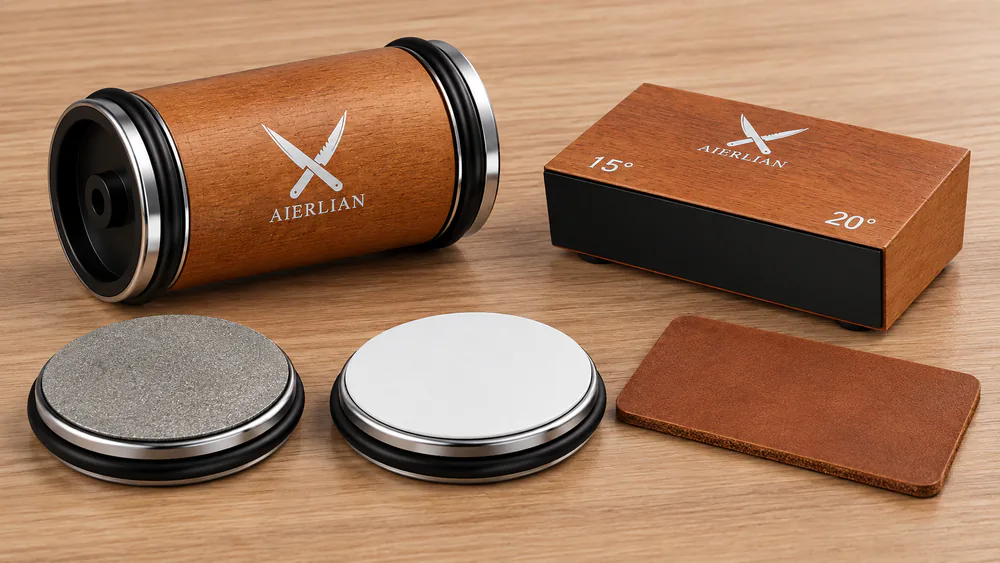
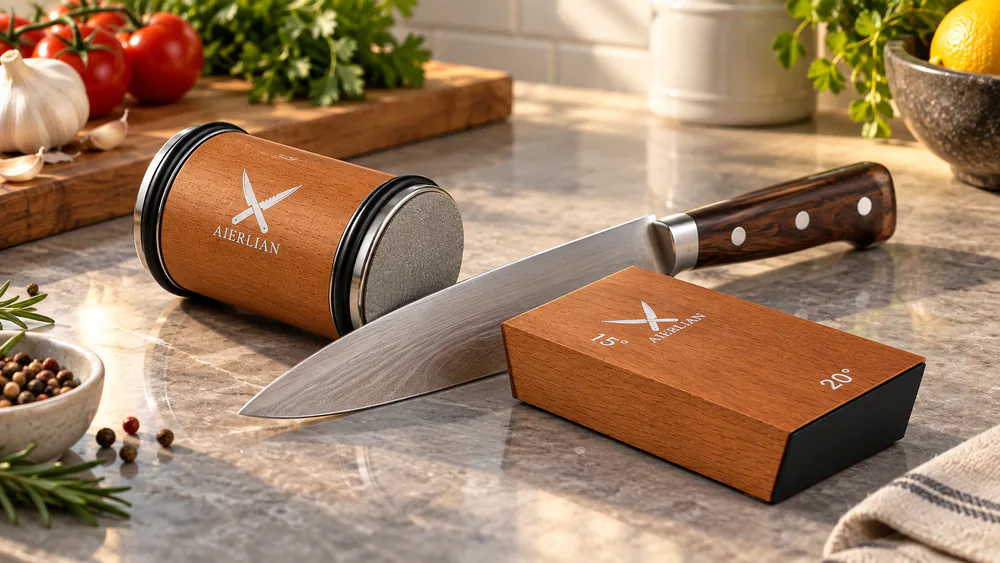
At about $40, the AIERLIAN performs like a much pricier tool. We ran a German chef's knife through the 400-grit diamond disc and the 3000-grit ceramic, and it sliced tomatoes with no pressure all week. The leather strop added a finish we did not expect, though the screw-on discs needed a check first because they can loosen mid-roll.
Pros
Fast diamond and ceramic two-stage sharpening
Four N42 magnets hold the blade firmly
Leather strop included for a razor finish
Cons
Screw-on discs need a check before each use
Not for serrated knives or scissors
Best Premium: HORL 2 Walnut
If you want a sharpener that looks like furniture and sharpens like a pro, this is it.
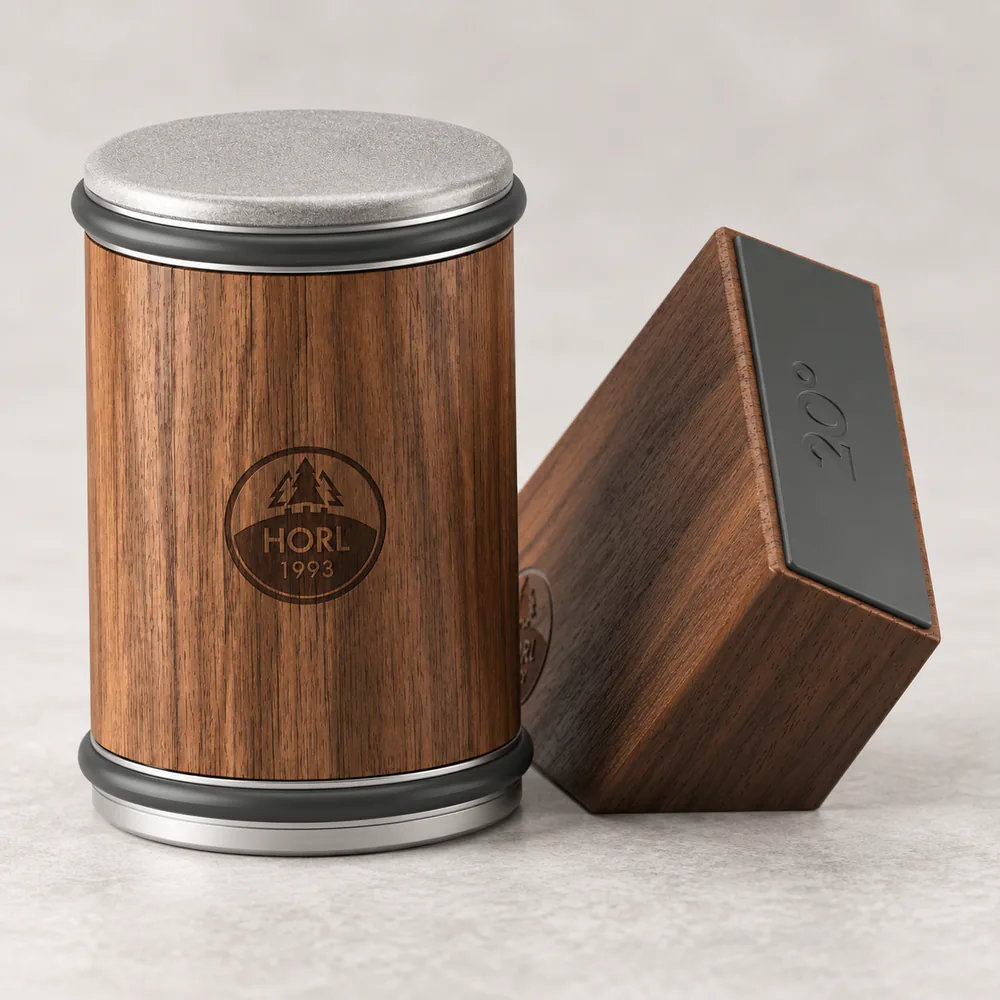
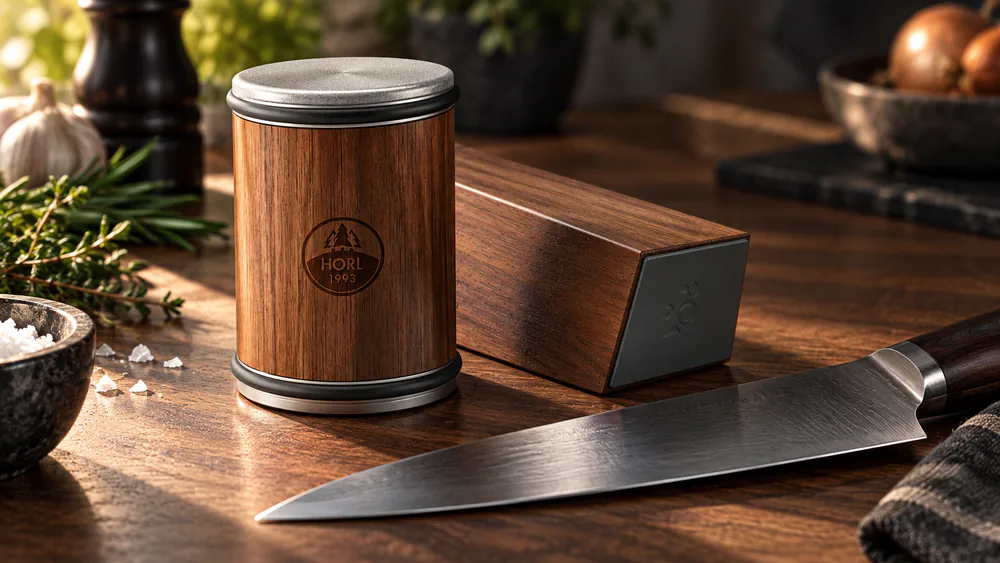
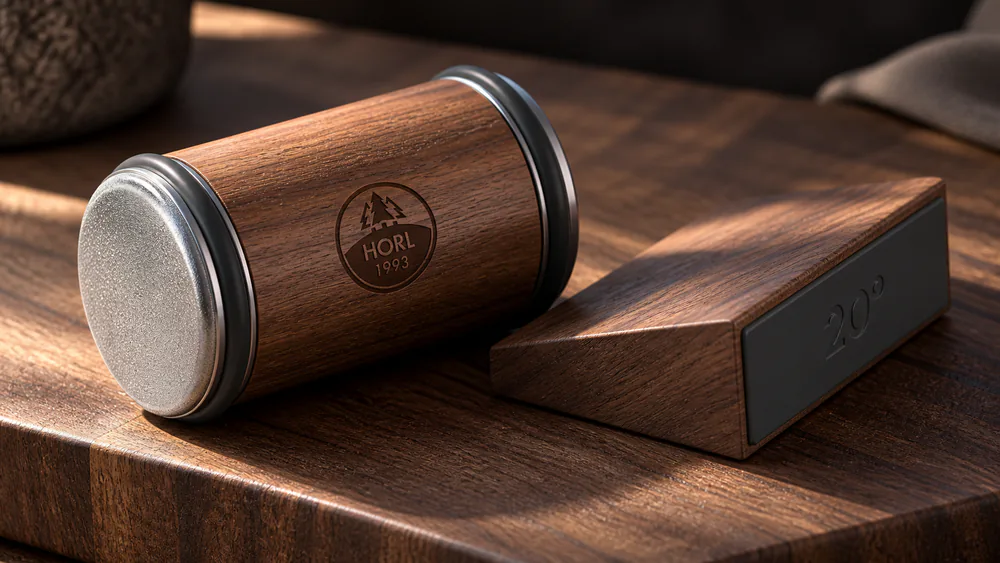
The HORL 2 is the most beautiful sharpener we tested, a handcrafted walnut block that also works beautifully. Its angle block and roller are two simple, foolproof parts that raised a razor edge on an eight-inch chef's knife in minutes, quieter than any electric we have used. The same two parts handled a three-inch pocket knife without issue. The limit is length: the block is not long enough past eight inches, so an extra-long blade forced a re-grip mid-pass, and cleavers sat too high for the barrel. The HORL 2 Walnut is the one we would keep for decades; the HORL 3 Cruise is the lighter travel sibling.
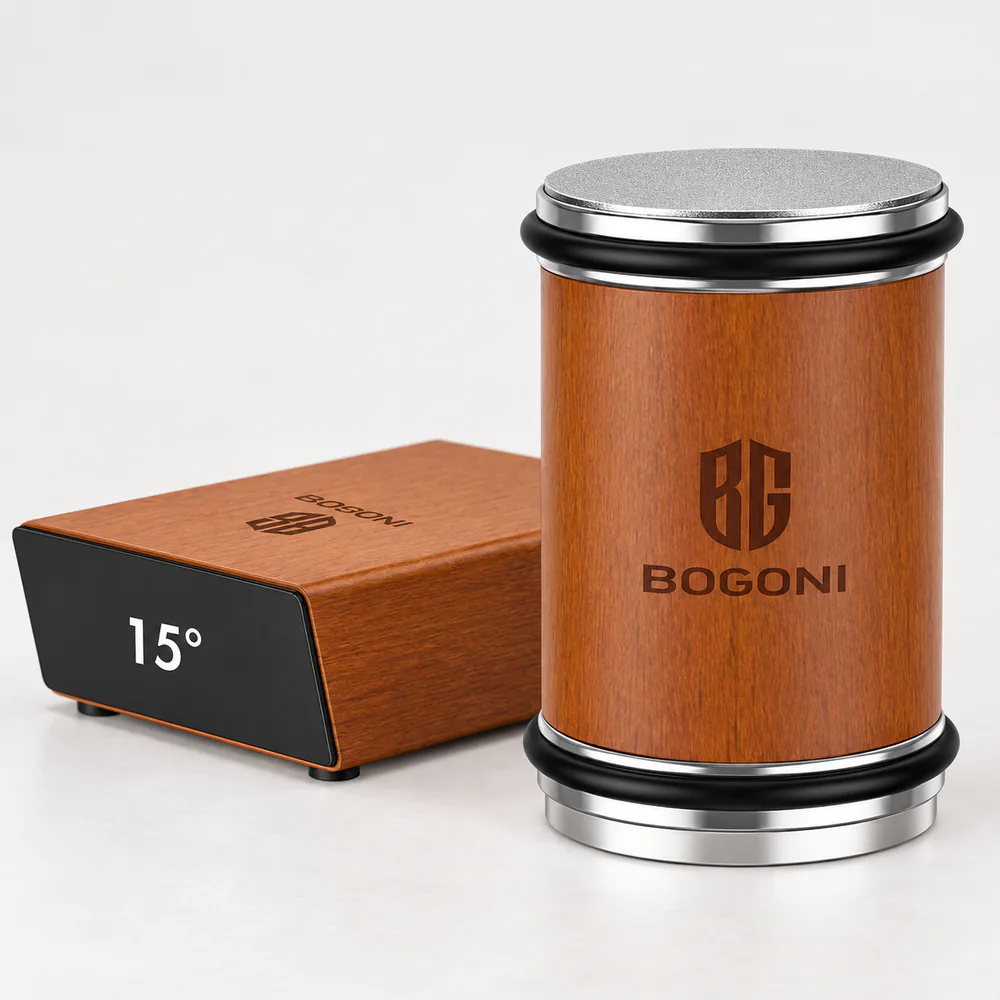
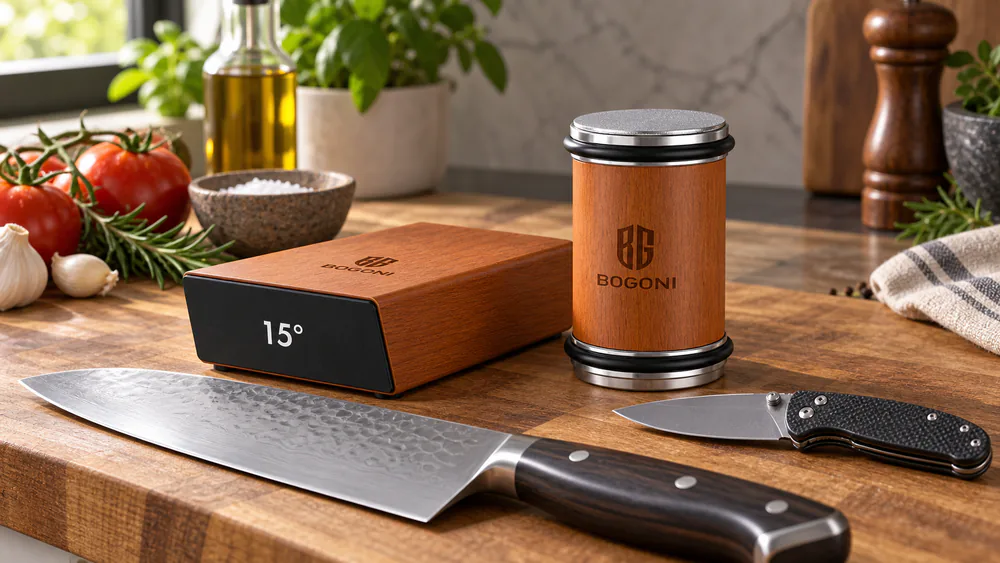
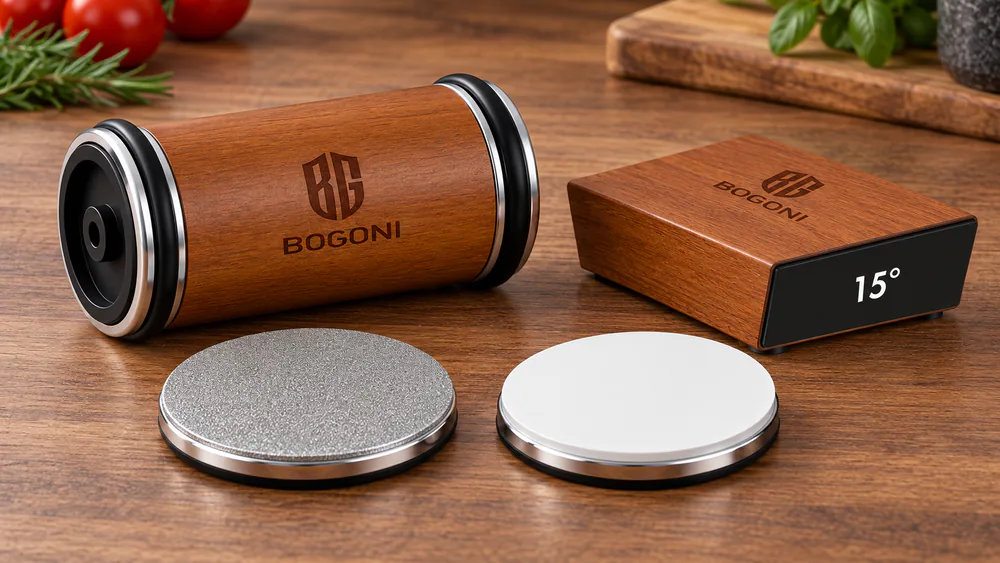
The BOGONI is the kit we would hand to a first-time sharpener. It took a dull, dinged utility knife to razor sharp in under four minutes, with less wrist strain than working a steel. The 400-grit disc reshaped the blade, and the 3000-grit ceramic polished it clean. A narrow paring knife slid on the magnet until we reseated it, and the barrel wanted a steady hand.
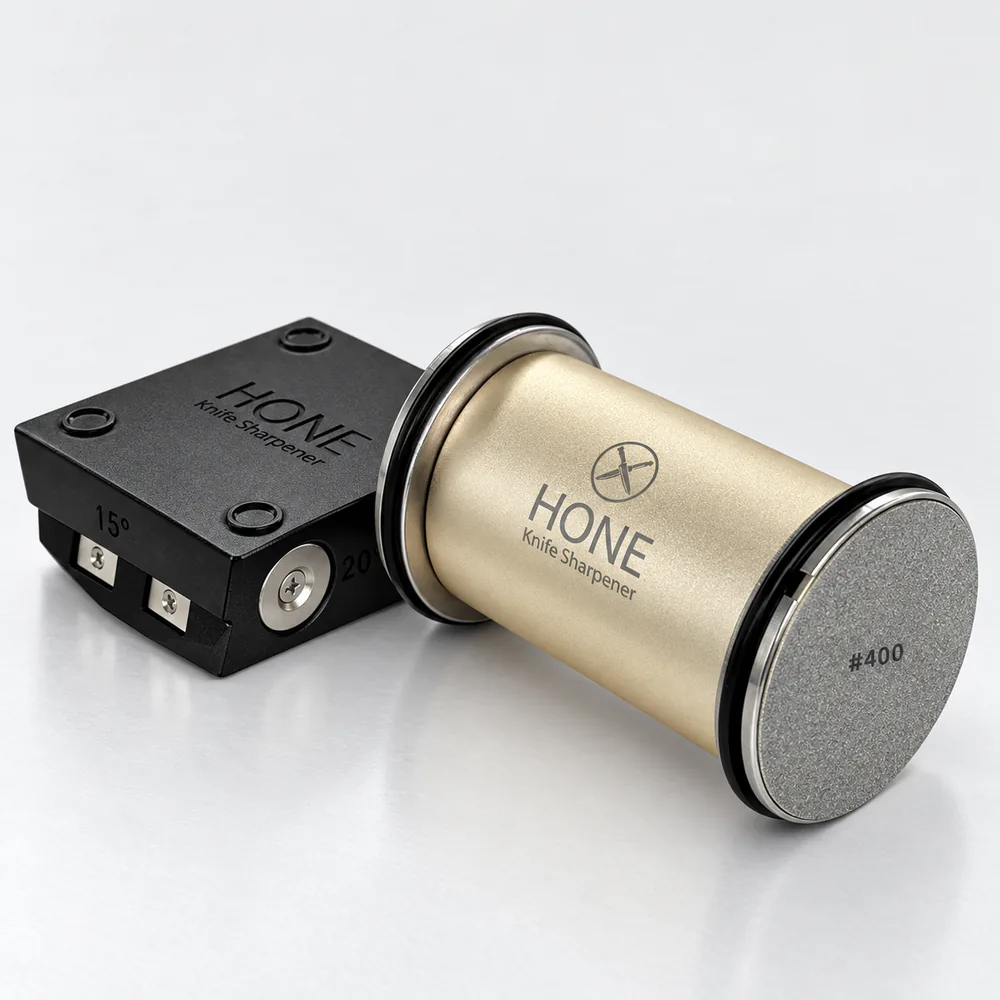
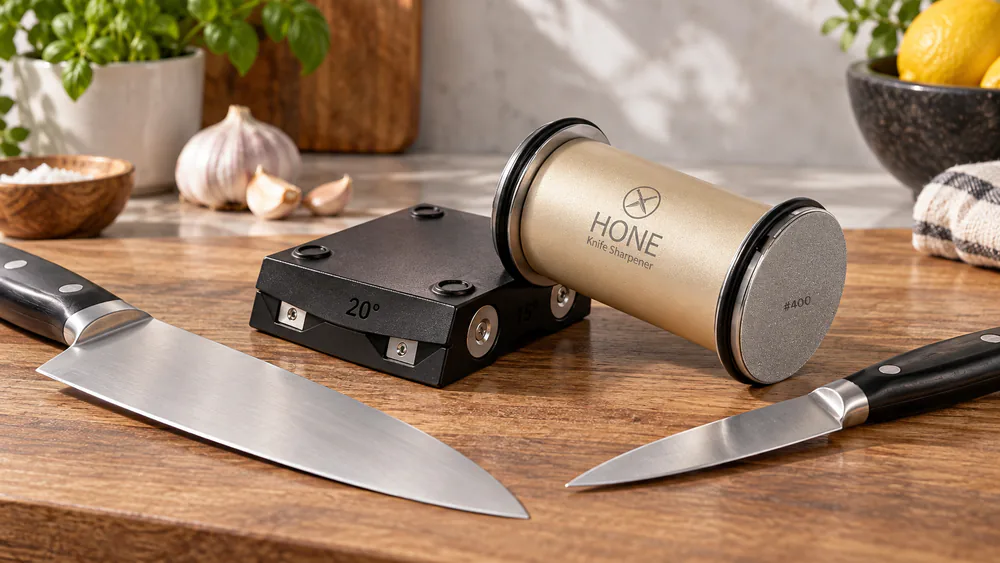
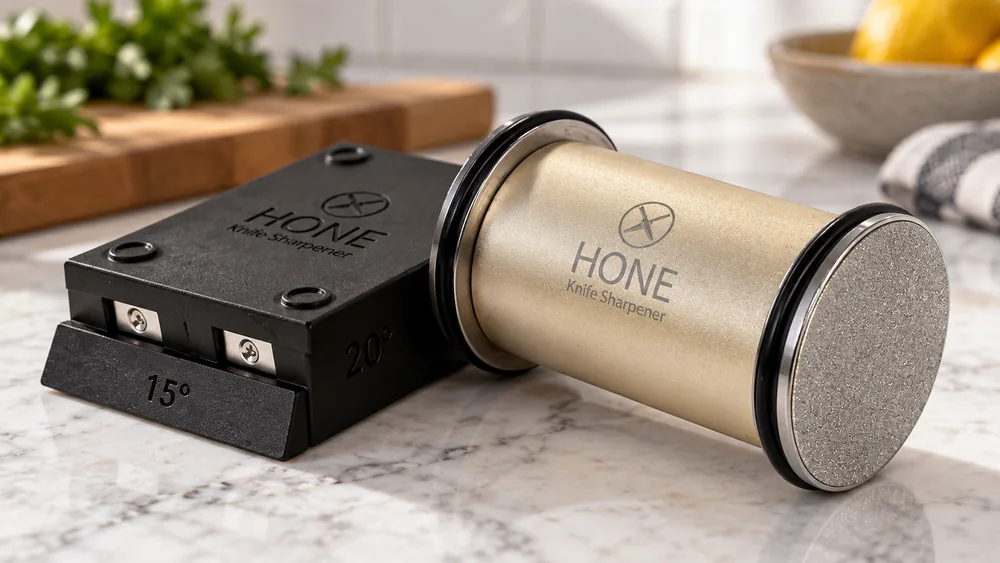
Where the HORL 2 forces a re-grip on long blades, the HONE takes a different route to range. Its barrel rides on ball bearings and rolls like butter, the best rolling action in the group. It rolls like a little tank and survived heavy use in our rotation without the roller sticking. It is also the only pick with a dedicated slot for pocket blades under three inches, and a four-inch paring knife sharpened on it without sliding away.
Pros
Best rolling action, on ball bearings
Dedicated small-knife slot
Dual-sided 400 and 1000 diamond plates, 10-year warranty
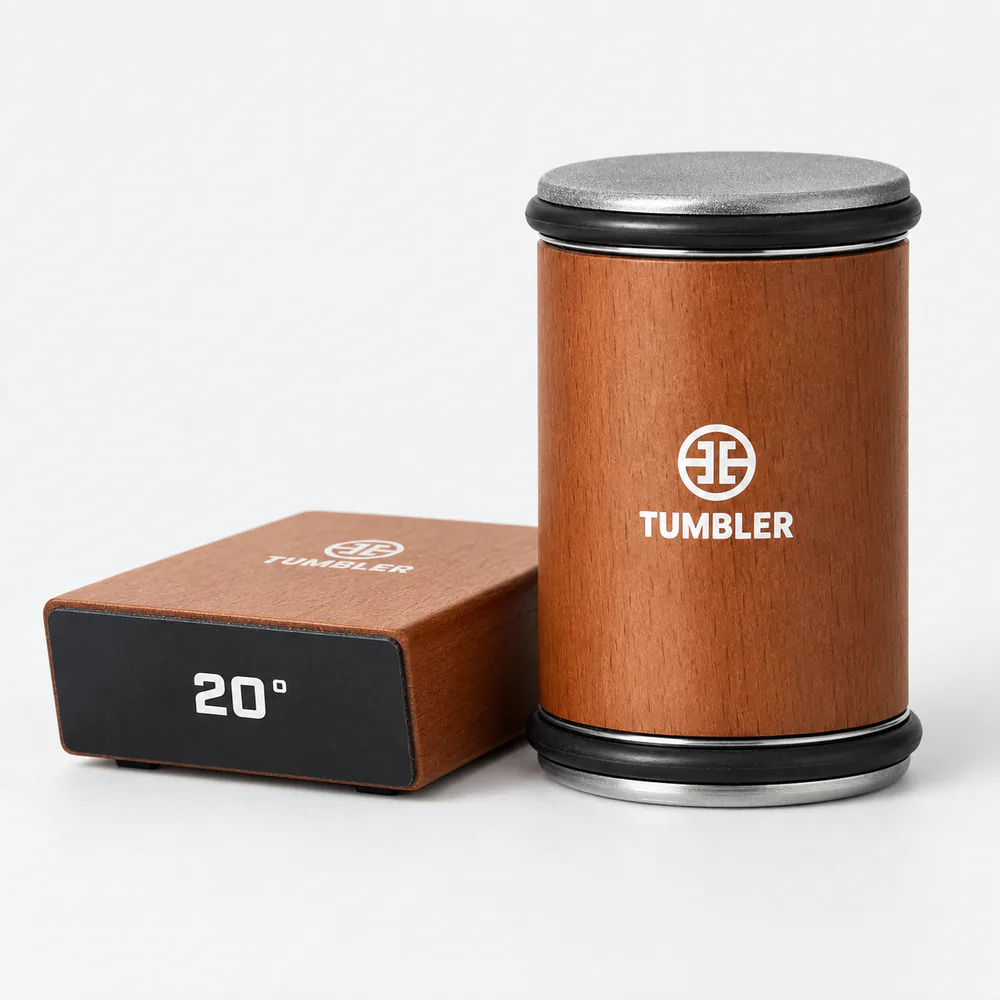
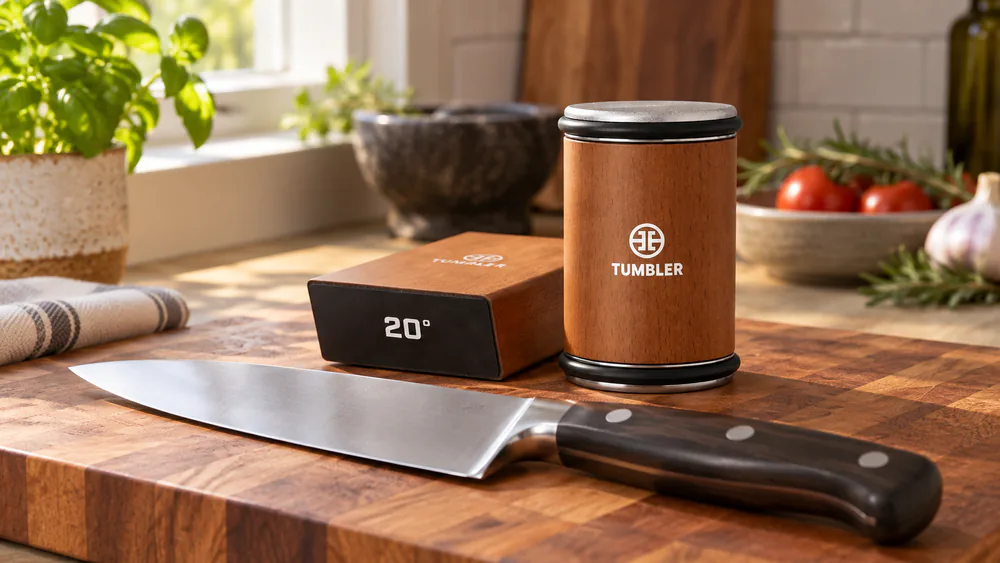
If the HONE is the all-rounder, the Tumbler is the big-blade specialist, and it is excellent at that job. Knives sharpened on it stayed sharp for weeks. A cheap, neglected blade came back in about ten minutes, though the first session is the labor-intensive one. Steak, fillet, and paring knives slide down the guide, so the roller never reaches them. That makes the Tumbler a tool for chef's and butcher knives only. The Original Tumbler is for big blades.
Pros
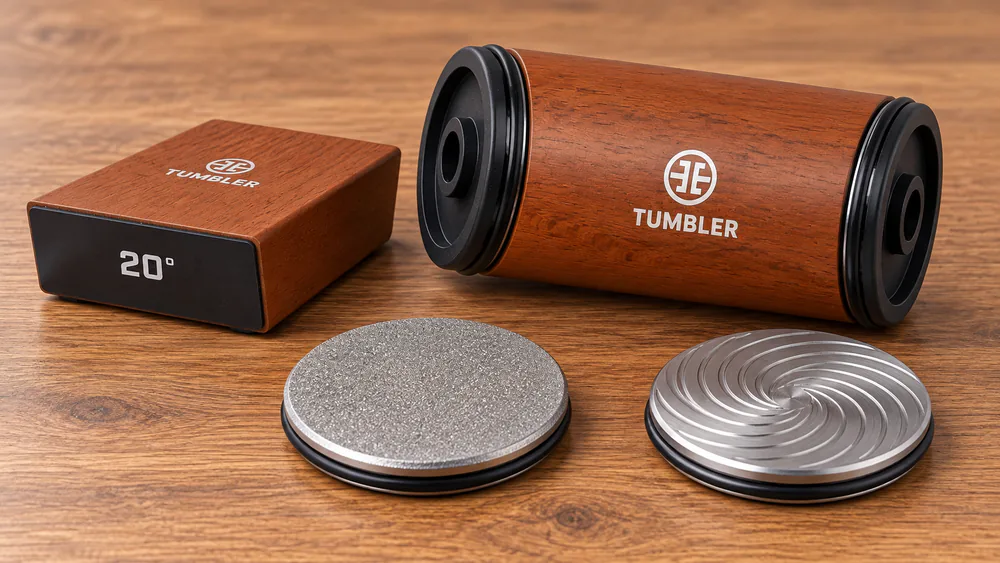
D35 diamond disc plus steel helix hone
Knives stay sharp for weeks
Lifetime warranty
Cons
Small knives slide down the guide
Some units seize with heavy use
Best Compact Design: Abardi Rolling Knife Sharpener
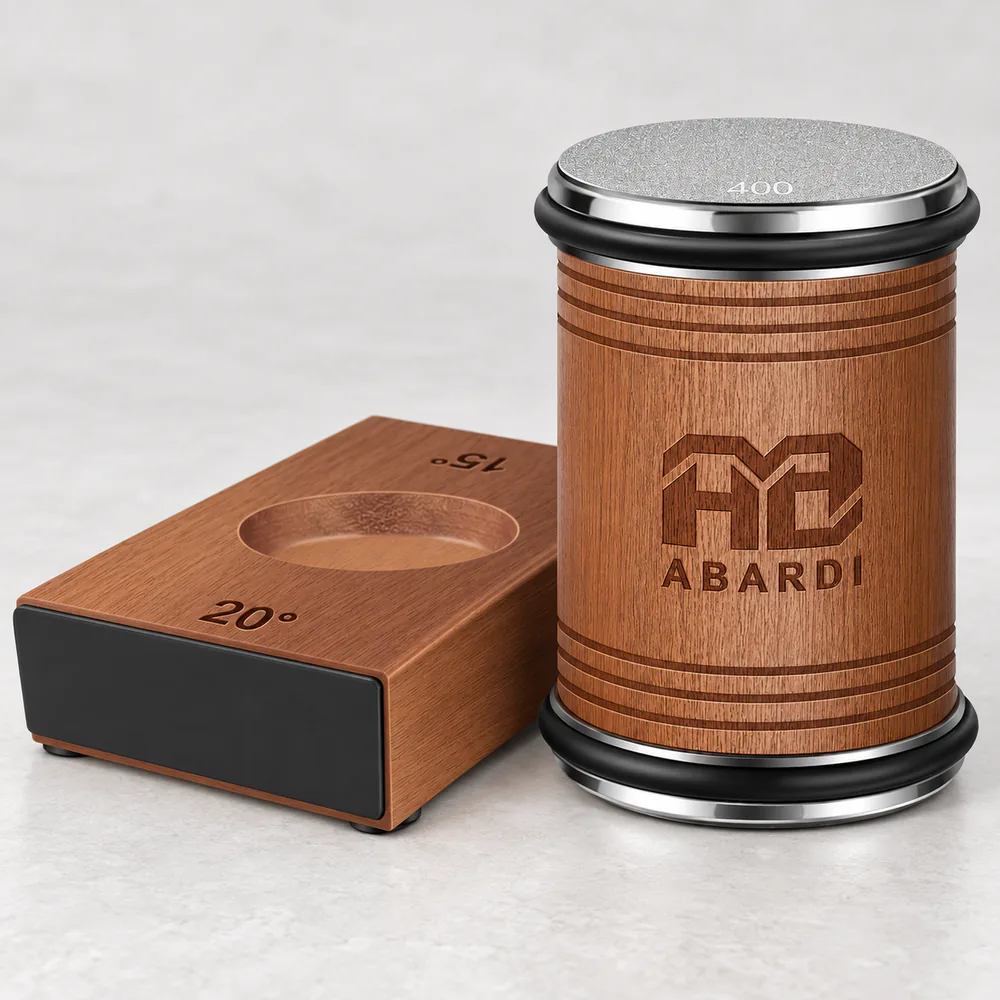
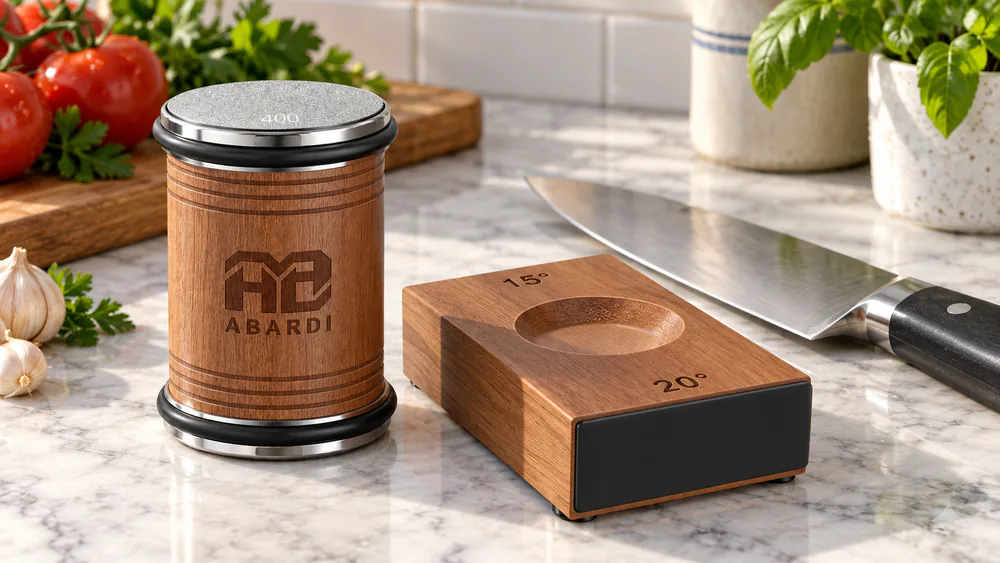
The Abardi is the pocket pick of the group, a small, light, natural-wood sharpener that put a good edge on a chef's knife in about three minutes. We ran a paring knife across the magnet to see how far the compact base could go, and the narrow blade slid down before the roller reached the edge. The rubber pad started to peel after a handful of sessions, tempering its appeal as a daily driver. For about $20, it is an easy yes for a backup or gift.
Pros
About 3 minutes per knife on chef's blades
Compact, light, wood body
Cheap entry at about $20
Cons
Narrow blades slide down the magnet
Rubber pad peeled early in testing
How We Tested the Best Rolling Knife Sharpeners
Our Testing Process
Every sharpener in this roundup spent 4 weeks in the test kitchen's prep rotation, with an edge check after every session. We sharpened on cheap kitchen knives, folding pocket knives, fixed-blade camping knives, and a high-end chef's knife, dulling blades between rounds. We scored edge sharpness, evenness, metal removed, and ease of use, and from sandpaper-dull most full sharpeners took eight to ten minutes while a quick honing took about a minute.
Tip. Apply even, moderate pressure and roll the barrel in one direction, from heel to tip, letting the disc do the cutting. End with a light honing pass to knock off the burr.
What We Looked For
Two patterns shaped every rating. First, rolling sharpeners sharpen unevenly: the belly gets sharp while the tip and heel stay dull, which we confirmed with an edge tester. Second, narrow and small blades are the weak point, sliding down the magnet before the roller reaches the edge. For the motions, see our guide to how to sharpen knives at home.
What Is a Rolling Knife Sharpener and Is It Worth It?
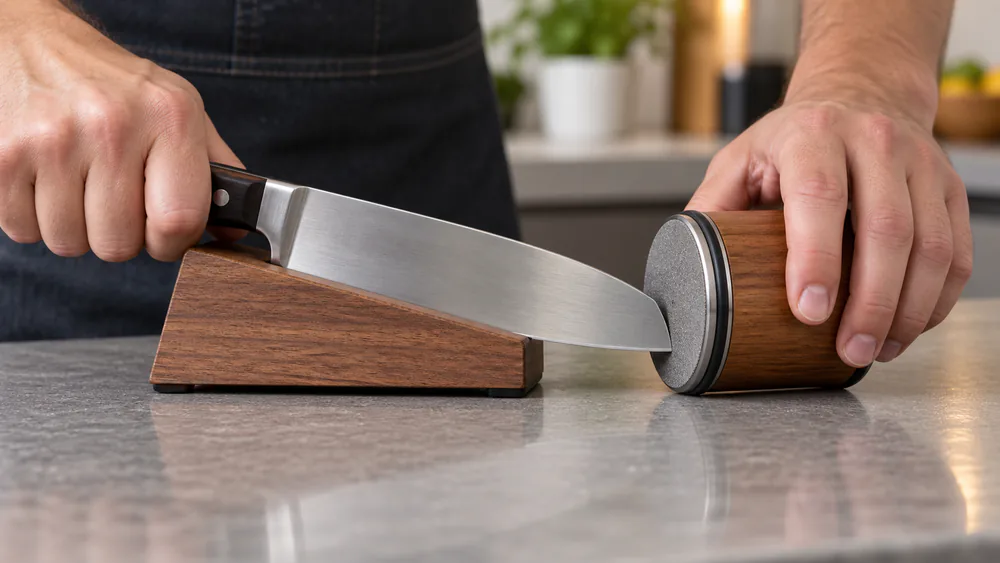
A rolling knife sharpener is a handled wheel with an abrasive disc and a magnetic base that holds the blade at a preset angle; you set the knife on the magnet, roll the wheel along the edge, and the disc cuts a fresh bevel.
How a Rolling Knife Sharpener Works
The disc does the cutting while your hand sets the path, and the angle guide locks the bevel.
Note. The Tumbler's steel helix disc hones and outlasts diamond stones but refines less than ceramic.
Key Benefits
The benefits show up after a week: consistent angles, quick touch-ups, a small footprint, and no freehand skill.
Honest Limitations: Who Should Skip It
If you want a mirror edge on a prized Japanese santoku, a whetstone or guided system is better. Rolling sharpeners cannot sharpen serrated knives, most exclude scissors, and they are slow on very dull or chipped blades. They remove less metal than electric pull-throughs, usually a good thing, but a damaged edge takes patience.
Warning. The edge points upward while you work, so a blade that pulls free is a cut waiting to happen. Avoid thin high-hardness Japanese blades on coarse discs, skip serrated knives, and never press hard.
For most home cooks, the answer is yes: a sharp knife with almost no skill and minimal metal removed. For the enthusiast, a practiced hand on a whetstone still wins on precision.
Rolling Sharpener vs Whetstone: Which Is Better?
Rolling sharpeners are the guided middle ground between freehand whetstone sharpening and electric sharpeners. A stone gives the most control and the finest edge, but it demands angle-guessing skill most home cooks never build. A rolling sharpener locks the angle for a consistent edge.
Across this month of prep, the trade-off was simple: a whetstone matches a bevel precisely, but you can also rock the angle and ruin an edge in a few strokes, while a rolling sharpener trades a lower ceiling for a much higher floor and removes far less metal than a pull-through. It is slower than a best electric knife sharpener on a truly dull blade.
Buy the stone for the sharpest possible edge if you enjoy the craft, or a rolling sharpener for a sharp knife in five minutes without the learning curve.
Buying Guide: How to Choose a Rolling Knife Sharpener
Rolling sharpeners look similar, but the differences decide whether you love one or abandon it.
Angle Settings
Angles are the first spec to check. A 20-degree edge is durable and suits most European knives; a 15-degree edge is keener and suits Japanese and high-carbon blades. Most kits offer preset 15/20 guides, and the Work Sharp adds 17 and 25 for outdoor work; match the angle to your knives and see our knife sharpening angles guide first.
Sharpening Material: Diamond vs Ceramic
Diamond discs cut fast and last longest, and industrial monocrystalline diamonds are the most durable abrasive, while ceramic discs hone and polish finer but remove metal slower. Most kits pair a coarse diamond with a fine ceramic disc, the right pattern for a kitchen.
Replaceable or Multi-Stage Discs
Replaceable discs extend the tool's life and let you add finer grits. The Work Sharp swaps discs with magnets, the HORL unscrews them, and the HONE uses detachable plates. The Tumbler and Abardi use fixed discs, fine until the abrasive wears; replacement diamond discs are the standard fix.
Knife Compatibility
The HONE is the only pick with a dedicated slot for small blades, the best choice for paring knives and pocket folders, while the Tumbler is a large-knife specialist. None handle serrated blades, and broad cleavers sit too high. For clamp-style tools, see our best knife sharpening systems guide.
Magnet Strength and Safety
The magnet is the safety feature that matters most, because the edge points up while you work. Magnets were adequate on full-size knives across every pick, but narrow and small blades are the weak point everywhere.
Warning. Check the magnet before every session, keep your fingers clear of the edge, and never force a blade that will not seat.
The sharpener that removes the least metal is the one that keeps your good knives alive the longest.
Price and Value
You can spend from about $20 to $160. The Abardi is a cheap entry point at about $20; the BOGONI and AIERLIAN at about $40 deliver most of the premium performance. The Work Sharp and HORL 2 earn their money at about $120 and $159 with better discs and stronger magnets. For the powered end, see our professional knife sharpeners roundup.
Frequently Asked Questions
Do rolling knife sharpeners actually work?
Yes, for most home kitchens. We brought dull knives back to shaving sharp in minutes, and the angle guide removes the freehand guesswork. They are less precise than a whetstone edge but remove far less metal than a pull-through.
What does a chipped edge need: a rolling sharpener or a stone?
A chipped edge is the rolling sharpener's weak spot, because its coarse disc is slow to re-profile real damage and can make things worse on a thin, hard Japanese blade. Grind out the chip on a whetstone or an electric sharpener first, then use the roller for routine maintenance, and never press hard over a nick.
How do I tell which angle my knife is ground at?
Most home knives are ground at 20 degrees on the European side or 15 degrees on the Japanese and high-carbon side. If you are not sure, look at the bevel under bright light: a wide, even bevel usually means the lower 15-degree angle, while a narrow bevel points to 20. When in doubt, start with the 20-degree guide, the durable everyday default. Our knife sharpening angles guide has more.
Can rolling sharpeners be used on Japanese or serrated knives?
Japanese and other high-hardness blades sharpen fine at the 15-degree side with light pressure. Serrated knives are a hard no: the roller rides over the scallops, and most models also exclude scissors.
Should I buy a rolling sharpener or a whetstone?
A whetstone is the finest edge if you have the skill, but a rolling sharpener is the better buy for routine maintenance, because it locks the angle and removes far less metal than a pull-through. The Work Sharp's four preset angles, from 15 to 25 degrees, extend that coverage to outdoor and fixed-blade work.
How often should I sharpen my knives?
For home use, sharpen every two to four weeks with a quick honing pass in between. Wipe the wheels after each session and rinse ceramic discs so they do not plug with shavings.
Final Thoughts
After a month of real prep, the rolling sharpener category surprised us. These tools are not gimmicks: they put a consistent edge on a dull knife with almost no skill, and they remove far less metal than the pull-through sharpeners most kitchens own. The Work Sharp is the one we would buy, and if the price stings, the BOGONI and AIERLIAN kits deliver a shocking amount of performance for about $40.
Our standing advice: buy one good chef's knife, keep a board that will not dull it, and learn ten minutes of sharpening, because a rolling sharpener makes those ten minutes count.